So you think you are talented and have what it takes to entertain people if only you could get your big break...... bullshit.
Here is a guy who is doing it and proves you don't need to have anything apart from a basic PC and raw talent.
Ze Frank has over 10,000 people a day hitting his website to watch his daily 3 minute video and has become an internet phenomenon
www.zefrank.com/theshow/
He even had people flying to opposite ends of the world to make an earth sandwich
http://www.zefrank.com/sandwich/
http://www.zefrank.com/theshow/firstsandwich
http://scourist.com/earth-sandwich/
More info in this NY Times article - how awesome
http://www.nytimes.com/zefrank
This guy is way cool, and way talented, not sure if he's as good at his day job but as far as creating an internet phenomenon A+
Now go and do your own thing and stop bitching.
Cheers,
Dean
Tuesday, June 20, 2006


Monday, June 19, 2006
Iacocca Montage
Iacocca, what a legend - this guy is amazing and a true legend.
If you haven't read it get this book today, http://www.amazon.com/iacocca
I read an article in this months Fortune on what he's doing at 81 and it inspired me to make this montage as my desktop for the week.
Cheers,
Dean

If you haven't read it get this book today, http://www.amazon.com/iacocca
I read an article in this months Fortune on what he's doing at 81 and it inspired me to make this montage as my desktop for the week.
Cheers,
Dean

Friday, June 16, 2006
"Race for Hard Zero"
This is a weird post and can be ignored but I need to post a copyright statement on a public server I dont own and can be independantly documented for date etc.
"Race for Hard Zero" © Dean Collins 16/6/06
I've used this term in a number of reports I've written over the years about pricing structures and business methodologies.
It refers to the commercial act of reducing prices to the point that you are selling a good or service for the cost of production, eg. phone calls are priced by the vendor with the biggest balls who is prepared to reduce the price closer to the cost of production which eventuates in another round of discounting by competitors in a "race for hard zero".
Feel free to use the term as long as you reference my copyright :)
Cheers,
Dean
"Race for Hard Zero" © Dean Collins 16/6/06
I've used this term in a number of reports I've written over the years about pricing structures and business methodologies.
It refers to the commercial act of reducing prices to the point that you are selling a good or service for the cost of production, eg. phone calls are priced by the vendor with the biggest balls who is prepared to reduce the price closer to the cost of production which eventuates in another round of discounting by competitors in a "race for hard zero".
Feel free to use the term as long as you reference my copyright :)
Cheers,
Dean
Wednesday, June 14, 2006
Cyborg ready? ......ready or not here we come
News broke on Wired this week about a group of people who have implanted super magnets in the tip of their finger this week.
What if, you could feel the hard drive spin up under the load? Or you could tell if an electrical cord was live before you touched it? For the few people who have rare earth magnets implanted in their fingers, these are among the reported effects -- a finger that feels electromagnetic fields along with the normal sense of touch.
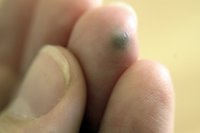
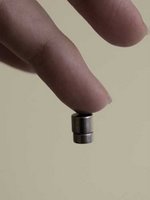
It's been described as a buzzing sensation, a tingling, an oscillation, movement, pure stimulation and, in the case of body-modification expert Shannon Larrett's encounter with a too-powerful antitheft gateway at a retail store, "Like sticking your hand in an ultrasonic cleaner."
http://www.wired.com/news/technology/0,71087-0.html?tw=rss.index
Now this may or may not surprise you. It depends on what your thoughts are and if you've read Ray Kurzweils book "The Singularity Is Near" this is nothing but a predetermined step for the human race.
But my question is this...."would you?"
Are you ready for the next step? What would your 6th sense be? (or 7th for my friends who already believe they are 'psychic').
Lasik eye surgery has become the default 'modification' of choice for people with poor sight, but if you had the option of increasing eyesight bandwidth so you could see at night, or see infra red heat....would you?
If correction of a deficieny is acceptable (hearing aids, internal pacemakers etc) then what is wrong with pushing our physical limitations, who didn't want to be the 6 Million Dollar Man or The Bionic Woman when they were kids.
And if you are vehemently opposed to cyborg modifications why is the step to part mechanical such a horror when your feelings on plastic surgery are laissez-faire?
Cheers,
Dean
What if, you could feel the hard drive spin up under the load? Or you could tell if an electrical cord was live before you touched it? For the few people who have rare earth magnets implanted in their fingers, these are among the reported effects -- a finger that feels electromagnetic fields along with the normal sense of touch.
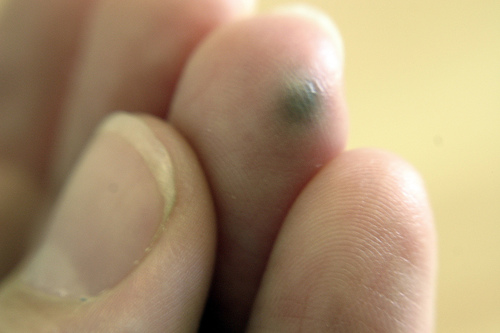
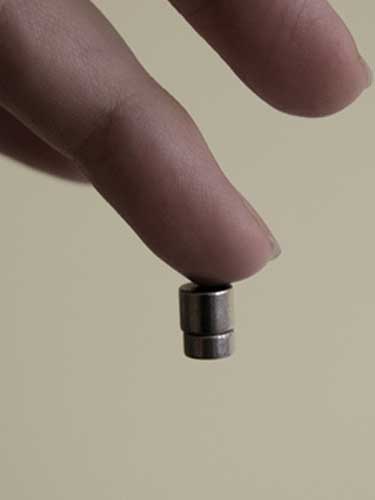
It's been described as a buzzing sensation, a tingling, an oscillation, movement, pure stimulation and, in the case of body-modification expert Shannon Larrett's encounter with a too-powerful antitheft gateway at a retail store, "Like sticking your hand in an ultrasonic cleaner."
http://www.wired.com/news/technology/0,71087-0.html?tw=rss.index
Now this may or may not surprise you. It depends on what your thoughts are and if you've read Ray Kurzweils book "The Singularity Is Near" this is nothing but a predetermined step for the human race.
But my question is this...."would you?"
Are you ready for the next step? What would your 6th sense be? (or 7th for my friends who already believe they are 'psychic').
Lasik eye surgery has become the default 'modification' of choice for people with poor sight, but if you had the option of increasing eyesight bandwidth so you could see at night, or see infra red heat....would you?
If correction of a deficieny is acceptable (hearing aids, internal pacemakers etc) then what is wrong with pushing our physical limitations, who didn't want to be the 6 Million Dollar Man or The Bionic Woman when they were kids.
And if you are vehemently opposed to cyborg modifications why is the step to part mechanical such a horror when your feelings on plastic surgery are laissez-faire?
Cheers,
Dean
Tuesday, June 13, 2006
Cool Tshirts
There is definitely one thing that they do very well here in the USA, funny cool tshirts.
Ok so this is a geek shirt that only 1 percent of the people you meet will understand, but you'll see the ones who do easily as they burst out laughing.

Life's short - laugh hard.
Cheers,
Dean
Ok so this is a geek shirt that only 1 percent of the people you meet will understand, but you'll see the ones who do easily as they burst out laughing.

Life's short - laugh hard.
Cheers,
Dean
Wednesday, June 07, 2006
Shhh it's a secret
You know it doesn't matter how many times I try to justify how hard it is to find an apartment in New York I still find it ridiculous to justify a brokers fee of 15%
Basically everytime you move you are pretty much up for this fee, and do you want to hear the worst bit....they dont do much for the money most of the time.
So whats the secret.... http://www.streeteasy.com/
This is the most amazing real estate website I have ever seen. Technically half of the things you see on this page wasn't even possible 12 months ago.
For the tech heads in the room it is written in Ruby On Rails, for everyone else, it's this cool new coding language.
It basically takes a whole heap of information from other agents web sites and then imports it into a database before displaying it clearly and co-herently, while adding a whole heap of cool features like A9 street level vision http://www.streeteasy.com/nyc/myplace (which I wrote about in my blog 6 months ago and love :) - ah it's great to be cutting edge).
It's the beginning of the end as far as brokers go, once you have centralised data available to everyone.... :)
Cheers,
Dean
Basically everytime you move you are pretty much up for this fee, and do you want to hear the worst bit....they dont do much for the money most of the time.
So whats the secret.... http://www.streeteasy.com/
This is the most amazing real estate website I have ever seen. Technically half of the things you see on this page wasn't even possible 12 months ago.
For the tech heads in the room it is written in Ruby On Rails, for everyone else, it's this cool new coding language.
It basically takes a whole heap of information from other agents web sites and then imports it into a database before displaying it clearly and co-herently, while adding a whole heap of cool features like A9 street level vision http://www.streeteasy.com/nyc/myplace (which I wrote about in my blog 6 months ago and love :) - ah it's great to be cutting edge).
It's the beginning of the end as far as brokers go, once you have centralised data available to everyone.... :)
Cheers,
Dean
EFF - Patent Busting project
Tired of bogus software patents? So are we! To combat these annoying and often dangerous legal weapons, EFF has launched the Patent Busting Project to take down some of worst offenders.
http://www.eff.org/patent/index.php
I. The Problem
Every year numerous illegitimate patent applications make their way through the United States patent examination process without adequate review. The problem is particularly acute in the software and Internet fields where the history of prior inventions (often called “prior art”) is widely distributed and poorly documented. As a result, we have seen patents asserted on such simple technologies as:
One-click online shopping (U.S. Patent No. 5,960,411.)
Online shopping carts (U.S. Patent No. 5,715,314.)
The hyperlink (U.S. Patent No. 4,873,662.)
Video streaming (U.S. Patent No. 5,132,992.)
Internationalizing domain names (U.S. Patent No. 6,182,148.)
Pop-up windows (U.S. Patent No. 6,389,458.)
Targeted banner ads (U.S. Patent No. 6,026,368.)
Paying with a credit card online (U.S. Patent No. 6,289,319.)
Framed browsing; (U.S. Patent Nos. 5,933,841 & 6,442,574.) and
Affiliate linking (U.S. Patent No. 6,029,141.)
II. The Harm
The harm these patents cause the public is profound.
Unlike most technologies, software and the Internet have attracted a vast number of small business, non-profit, and individual users each of whom has adopted and built upon these resources as part of their daily interaction with computers and the online world. From open source programming to online journaling to political campaigning, the average citizen is using new technology online and on her desktop as often as any traditional company.

http://www.eff.org/patent/index.php
I. The Problem
Every year numerous illegitimate patent applications make their way through the United States patent examination process without adequate review. The problem is particularly acute in the software and Internet fields where the history of prior inventions (often called “prior art”) is widely distributed and poorly documented. As a result, we have seen patents asserted on such simple technologies as:
One-click online shopping (U.S. Patent No. 5,960,411.)
Online shopping carts (U.S. Patent No. 5,715,314.)
The hyperlink (U.S. Patent No. 4,873,662.)
Video streaming (U.S. Patent No. 5,132,992.)
Internationalizing domain names (U.S. Patent No. 6,182,148.)
Pop-up windows (U.S. Patent No. 6,389,458.)
Targeted banner ads (U.S. Patent No. 6,026,368.)
Paying with a credit card online (U.S. Patent No. 6,289,319.)
Framed browsing; (U.S. Patent Nos. 5,933,841 & 6,442,574.) and
Affiliate linking (U.S. Patent No. 6,029,141.)
II. The Harm
The harm these patents cause the public is profound.
Unlike most technologies, software and the Internet have attracted a vast number of small business, non-profit, and individual users each of whom has adopted and built upon these resources as part of their daily interaction with computers and the online world. From open source programming to online journaling to political campaigning, the average citizen is using new technology online and on her desktop as often as any traditional company.
Monday, June 05, 2006
The Extreme Diet Coke & Mentos Experiments:
Got to make you smile first thing on a Monday morning :)
What happens when you combine 200 liters of Diet Coke and over 500 Mentos mints? It's amazing and completely insane.The first part of this video demonstrates a simple geyser, and the second part shows just how extreme it can get. Over one hundred jets of soda fly into the air in less than three minutes.It's a hysterical and spectacular mint-powered version of the Bellagio Fountains in Las Vegas, brought to you by the mad scientists at EepyBird.com.
http://eepybird.com/dcm1.html
and not to spoil the fun but in case you are wondering; copied from slashdot is the answer.
Not chemical, so it should work just as well with other sodas/nucleation devices:
"These chemists are saying that the primary cause is physical, not chemical. Their explanation: nucleation sites. If you have a liquid that is supersaturated with gas (like soda, which is pumped full of carbon dioxide), a nucleation site is a place where the gas is able to form bubbles. Nucleation sites can be scratches on a surface or specks of dust - anywhere that you have a high surface area in a very small volume. That's where bubbles can form.
Mentos seem to be loaded with nucleation sites. In other words, there are so many microscopic nooks and crannies on the surface of a Mento that an incredible number of bubbles will form when you drop it in a bottle of soda. Since the Mentos are also heavy enough to sink, they react with the soda all the way to the bottom. The escaping bubbles quickly turn into a raging foam, and the pressure builds dramatically. Before you know it, you've got a big geyser happening!"
Cheers,
Dean
What happens when you combine 200 liters of Diet Coke and over 500 Mentos mints? It's amazing and completely insane.The first part of this video demonstrates a simple geyser, and the second part shows just how extreme it can get. Over one hundred jets of soda fly into the air in less than three minutes.It's a hysterical and spectacular mint-powered version of the Bellagio Fountains in Las Vegas, brought to you by the mad scientists at EepyBird.com.
http://eepybird.com/dcm1.html
and not to spoil the fun but in case you are wondering; copied from slashdot is the answer.
Not chemical, so it should work just as well with other sodas/nucleation devices:
"These chemists are saying that the primary cause is physical, not chemical. Their explanation: nucleation sites. If you have a liquid that is supersaturated with gas (like soda, which is pumped full of carbon dioxide), a nucleation site is a place where the gas is able to form bubbles. Nucleation sites can be scratches on a surface or specks of dust - anywhere that you have a high surface area in a very small volume. That's where bubbles can form.
Mentos seem to be loaded with nucleation sites. In other words, there are so many microscopic nooks and crannies on the surface of a Mento that an incredible number of bubbles will form when you drop it in a bottle of soda. Since the Mentos are also heavy enough to sink, they react with the soda all the way to the bottom. The escaping bubbles quickly turn into a raging foam, and the pressure builds dramatically. Before you know it, you've got a big geyser happening!"
Cheers,
Dean
Sunday, June 04, 2006
11th Circuit to Webmasters: Telling Someone To Go Away Doesn't Make Them
There currently is a very interesting and very confusing (read political) court case going on at the moment that the 11th Circuit has just ruled on (which in my mind has to be inevitably overturned in the Supreme Court).
A good summary is located here at the
http://www.acsblog.org/ip-and-tech-law-2883-11th-circuit-to-webmasters-telling-someone-to-go-away-doesn't-make-them.html
The Eleventh Circuit in the case of Snow v. DirecTV, a "private support group website for individuals who have been, are being, or will be sued by any Corporate entity".
In order to access Snow's site, a user was required to register a username and password, and to agree to a statement affirming that the user was not associated with DirecTV, inc.
He claimed that several agents of DirecTV ignored this warning and accessed his site. According to Snow, such unauthorized access violated the Stored Communications Act (SCA), which forbids accessing an electronic communication "without authorization".
The Eleventh Circuit rejected this claim. According to the court, the SCA does not apply to communications which are "readily accessible to the general public". On Snow's site, any member of the general public could access the site by merely registering with a username and password and clicking on the words "I Agree to these terms."
Such an easily surmountable barrier to access is, according to the court, insufficient to make a site not "readily accessible to the general public".
While the court did not explain just what sort of security measures would invoke the SCA, it did hint that a webmaster who "screens the registrants before granting access" would have a stronger claim than one who merely asks his registrants to "self screen".
Now this goes against all contrary law that I'm aware of eg: If I break into a website I can go to jail-
What about Benjamin Smith III who was arrested and charged with unauthorized access to a computer network, a third-degree felony in the state of Florida. For merely using an unsecured access point to connect to the internet
http://arstechnica.com/news.ars/post/20050707-5068.html
Or Adrian Lamo who was prosecuted for accessing web site databases, not hacking, or "breaking and entering" but just accessing poorly configured websites built by people who should have known better http://news.com.com/2100-1023-846215.html
This is the same as posting a no tresspassing sign. The 11th circuit court says because it's easy to ignore and walk right past the owner cannot kick you off his property. I think NOT! This will be reversed.
If it doesn't what happens to the legal protection of webmasters who offer adult content but allow you to self certify by clicking a box saying you are over 18.
When I sell certain cryptography software outside of the USA my only protection is that I know that on installation the end user has to agree not to export to certain countries, does this mean that all EULA (you know...the I agree box when you install software) is no longer valid, does this mean that because the general public is easily able to bypass this process on pirate software that EULA's are no longer enforcable.
You cant have one law for the big business and one law for the public.
Whats even more disconcerting is that the EFF an organisation I fully support... actually filed a friends of the court statement for the DirectTV side of the case, (though I think this had to do with the legal mistake in the ruling of the lower court than the actual "vibe" of the case.
http://www.eff.org/legal/cases/Snow_v_DirecTV/
I'm off to do more research but I think this one needs to kept an eye on because if it's not overturned there are going to be far wider implications.
Cheers,
Dean
A good summary is located here at the
http://www.acsblog.org/ip-and-tech-law-2883-11th-circuit-to-webmasters-telling-someone-to-go-away-doesn't-make-them.html
The Eleventh Circuit in the case of Snow v. DirecTV, a "private support group website for individuals who have been, are being, or will be sued by any Corporate entity".
In order to access Snow's site, a user was required to register a username and password, and to agree to a statement affirming that the user was not associated with DirecTV, inc.
He claimed that several agents of DirecTV ignored this warning and accessed his site. According to Snow, such unauthorized access violated the Stored Communications Act (SCA), which forbids accessing an electronic communication "without authorization".
The Eleventh Circuit rejected this claim. According to the court, the SCA does not apply to communications which are "readily accessible to the general public". On Snow's site, any member of the general public could access the site by merely registering with a username and password and clicking on the words "I Agree to these terms."
Such an easily surmountable barrier to access is, according to the court, insufficient to make a site not "readily accessible to the general public".
While the court did not explain just what sort of security measures would invoke the SCA, it did hint that a webmaster who "screens the registrants before granting access" would have a stronger claim than one who merely asks his registrants to "self screen".
Now this goes against all contrary law that I'm aware of eg: If I break into a website I can go to jail-
What about Benjamin Smith III who was arrested and charged with unauthorized access to a computer network, a third-degree felony in the state of Florida. For merely using an unsecured access point to connect to the internet
http://arstechnica.com/news.ars/post/20050707-5068.html
Or Adrian Lamo who was prosecuted for accessing web site databases, not hacking, or "breaking and entering" but just accessing poorly configured websites built by people who should have known better http://news.com.com/2100-1023-846215.html
This is the same as posting a no tresspassing sign. The 11th circuit court says because it's easy to ignore and walk right past the owner cannot kick you off his property. I think NOT! This will be reversed.
If it doesn't what happens to the legal protection of webmasters who offer adult content but allow you to self certify by clicking a box saying you are over 18.
When I sell certain cryptography software outside of the USA my only protection is that I know that on installation the end user has to agree not to export to certain countries, does this mean that all EULA (you know...the I agree box when you install software) is no longer valid, does this mean that because the general public is easily able to bypass this process on pirate software that EULA's are no longer enforcable.
You cant have one law for the big business and one law for the public.
Whats even more disconcerting is that the EFF an organisation I fully support... actually filed a friends of the court statement for the DirectTV side of the case, (though I think this had to do with the legal mistake in the ruling of the lower court than the actual "vibe" of the case.
http://www.eff.org/legal/cases/Snow_v_DirecTV/
I'm off to do more research but I think this one needs to kept an eye on because if it's not overturned there are going to be far wider implications.
Cheers,
Dean
Friday, June 02, 2006
Weak Spot Guerilla Marketing
I haven't seen any of these in person but I wanted to post about it because this is a perfect example of weak spot marketing (the best was Universals attack on Disney's stranglehold of the theme park holiday - read about it in Michael Eisners autobiography).
Marketing so often comes down to speeds and feeds and whilst there is a place for it, real marketing is striking a sweet spot with your target audience that is emotive and cannot be refuted by your competitor in any way without changing their base position.
Apple is in such a strong position with their iPod that there is no way they can reposition themselves to compete against this type of guerilla marketing.
I'd like to know who came up with this for SanDisk and buy them a beer.
Cheers,
Dean
SanDisk goes after the iPod iPuppets

If you've been on public transport this past week, you'll have noticed what looks like a counter-culture uprising against the iPod. Posters and stickers have appeared showing chimps, donkeys and sheep listening to music on iPods. Underneath the images there are taglines like 'are you an iChimp?' and, 'Don't follow the iPack'. One advert shows a man strung up by iPod headphones, like Pinocchio, beneath him the tagline reads, 'have you become an iPuppet?'
The adverts have a pseudo-street graffiti style. The stencilled graphics and ancient typewriter font give the impression of an underground movement against cultural homogenisation. But visit the idont.com Web site espoused by the ads and you'll uncover a different story. Far from a triumph of AdBusters or a campaign financed by Naomi Klein converts, these posters are actually SanDisk's new marketing campaign.
SanDisk is Apple's archrival. Since May 2006 SanDisk has been the world's second most popular MP3 player manufacturer, behind Apple. Its e200 player looks very much like the nano, but unlike many other iPod clones it sells well.
This anti-iPod advertising campaign represents a spark of genuine retaliation against Apple. It's a relief to see a rival bring out its guns, in what had become a landscape devoid of any major competition for the iPod.
SanDisk is the first company to market its player as an ideological rather than technological alternative to the iPod. To do so is to fight Apple on their own terms. The SanDisk e200 is not being touted as more advanced than the iPod, it doesn't claim to have longer battery life or a larger capacity. Instead the e200 is being marketed simply as what it is not. It's not an iPod.
The SanDisk assault doesn't end there. SanDisk is reported to have quietly approached the open source developers behind Rockbox, a free operating system for MP3 players. The company is said to be interested in porting the Rockbox software to its e200 player. Rockbox was first conceived as an alternative to the flawed software provided with an Archos MP3 player, but it has evolved into a multi-platform alternative interface supported by many different players. The latest version supports everything from an iPod to an iRiver MP3 player.
Not only would a Rockbox port earn SanDisk credibility with grassroot geeks, but the software offers a number of appealing features, including support for nearly every codec going.
It looks like Apple may finally have a fight on its hands. iPod critics are quick to bemoan Apple's reliance on marketing over the player's technical advantages, now SanDisk will be putting this to the test. If Apple really won the west by manipulating the iPod to the point where it became a lifestyle necessity for any self-respecting music lover, can SanDisk unseat it by turning the iPod's ubiquity against it?
In many ways, SanDisk's advertising campaign has the phony ring of Sony's heavily criticised faux-graffiti campaign for the PSP. Sony hired graffiti artists to paint what looked like street art on city walls, but the characters depicted suspiciously clasped PSPs. Critics on some forums said Sony was "shamelessly appropriating a culture". Effectively that is what SanDisk is doing here. The adverts may use the graphic vocabulary of anti-capitalist campaigns, but the object of the exercise is to sell SanDisk MP3 players. Still, competition is exactly what Apple needs right now, and this is an ingenious attack. Now get back to your iPods, chimps! -CS
Marketing so often comes down to speeds and feeds and whilst there is a place for it, real marketing is striking a sweet spot with your target audience that is emotive and cannot be refuted by your competitor in any way without changing their base position.
Apple is in such a strong position with their iPod that there is no way they can reposition themselves to compete against this type of guerilla marketing.
I'd like to know who came up with this for SanDisk and buy them a beer.
Cheers,
Dean
SanDisk goes after the iPod iPuppets

If you've been on public transport this past week, you'll have noticed what looks like a counter-culture uprising against the iPod. Posters and stickers have appeared showing chimps, donkeys and sheep listening to music on iPods. Underneath the images there are taglines like 'are you an iChimp?' and, 'Don't follow the iPack'. One advert shows a man strung up by iPod headphones, like Pinocchio, beneath him the tagline reads, 'have you become an iPuppet?'
The adverts have a pseudo-street graffiti style. The stencilled graphics and ancient typewriter font give the impression of an underground movement against cultural homogenisation. But visit the idont.com Web site espoused by the ads and you'll uncover a different story. Far from a triumph of AdBusters or a campaign financed by Naomi Klein converts, these posters are actually SanDisk's new marketing campaign.
SanDisk is Apple's archrival. Since May 2006 SanDisk has been the world's second most popular MP3 player manufacturer, behind Apple. Its e200 player looks very much like the nano, but unlike many other iPod clones it sells well.
This anti-iPod advertising campaign represents a spark of genuine retaliation against Apple. It's a relief to see a rival bring out its guns, in what had become a landscape devoid of any major competition for the iPod.
SanDisk is the first company to market its player as an ideological rather than technological alternative to the iPod. To do so is to fight Apple on their own terms. The SanDisk e200 is not being touted as more advanced than the iPod, it doesn't claim to have longer battery life or a larger capacity. Instead the e200 is being marketed simply as what it is not. It's not an iPod.
The SanDisk assault doesn't end there. SanDisk is reported to have quietly approached the open source developers behind Rockbox, a free operating system for MP3 players. The company is said to be interested in porting the Rockbox software to its e200 player. Rockbox was first conceived as an alternative to the flawed software provided with an Archos MP3 player, but it has evolved into a multi-platform alternative interface supported by many different players. The latest version supports everything from an iPod to an iRiver MP3 player.
Not only would a Rockbox port earn SanDisk credibility with grassroot geeks, but the software offers a number of appealing features, including support for nearly every codec going.
It looks like Apple may finally have a fight on its hands. iPod critics are quick to bemoan Apple's reliance on marketing over the player's technical advantages, now SanDisk will be putting this to the test. If Apple really won the west by manipulating the iPod to the point where it became a lifestyle necessity for any self-respecting music lover, can SanDisk unseat it by turning the iPod's ubiquity against it?
In many ways, SanDisk's advertising campaign has the phony ring of Sony's heavily criticised faux-graffiti campaign for the PSP. Sony hired graffiti artists to paint what looked like street art on city walls, but the characters depicted suspiciously clasped PSPs. Critics on some forums said Sony was "shamelessly appropriating a culture". Effectively that is what SanDisk is doing here. The adverts may use the graphic vocabulary of anti-capitalist campaigns, but the object of the exercise is to sell SanDisk MP3 players. Still, competition is exactly what Apple needs right now, and this is an ingenious attack. Now get back to your iPods, chimps! -CS
Subscribe to:
Posts (Atom)