tvweek
itworld
lightreading
hmmm I'm not sure if I'm happy or pissed about this development but Akimbo has just received $15.5 million from Cisco.
I'm wondering if Akimbo will get back into the hardware market after dropping out to become just another channel on the Microsoft Media Center Platform or if they will become just another line of technology built into the Scientific Atlanta boxes.
Either way, congratulations and you have my phone number for when you are ready to invite me back for export discussions.
Cheers,
Dean
Monday, June 26, 2006


Murder in NY
This post started by Jodie asking.... hmm you don't see as many murders in NY reported in the press, well not as much as you would think when we moved from Australia to NY (we only see about 1 murder a week on the news).
hmmm .... a bit of googling lead me to this page (do you drop the 'e' when referring to the verb of using google?)
http://www.nytimes.com/HOMICIDE
it's a link to a google map mashup between various crime databases (have I told you recently how much I love mashups).
The basics of the information is that there are approx 500 murders each year in the 5 Manhattan boroughs for the last 3 years and they are fairly roughly spread out at 100 per borough (so any thoughts of the Bronx being a pit of murder is just plain wrong) however what is really interesting is the 'collectivity' around certain blocks, what also surprised (well maybe not) was the lack oh physical murders (strangulation or beatings) vs shooting.
On average there are only 10 strangulations in NY each year, for 20 million people that seems kind of low.
BTW in case you are interested, Washington DC has the highest murder rate per capita and I found that Honolulu is at 32nd with only 18 last year (for 900,000 people).
Looks like those Hawaiins know how to have a good time hanging out enjoying life.
Dean
hmmm .... a bit of googling lead me to this page (do you drop the 'e' when referring to the verb of using google?)
http://www.nytimes.com/HOMICIDE
it's a link to a google map mashup between various crime databases (have I told you recently how much I love mashups).
The basics of the information is that there are approx 500 murders each year in the 5 Manhattan boroughs for the last 3 years and they are fairly roughly spread out at 100 per borough (so any thoughts of the Bronx being a pit of murder is just plain wrong) however what is really interesting is the 'collectivity' around certain blocks, what also surprised (well maybe not) was the lack oh physical murders (strangulation or beatings) vs shooting.
On average there are only 10 strangulations in NY each year, for 20 million people that seems kind of low.
BTW in case you are interested, Washington DC has the highest murder rate per capita and I found that Honolulu is at 32nd with only 18 last year (for 900,000 people).
Looks like those Hawaiins know how to have a good time hanging out enjoying life.
Dean
Sunday, June 25, 2006
Ethanol - the next great savior?
There has been a lot of hype here in the USA about Ethanol being the great saviour (one thing I have really noticed in the USA is how dominant the farming lobby is...you think Australian farmers get some decent political deals, in the USA they have their foot in a truly organised and militant way of the neck of the politicians).
The USA's refusal to conform to the WTO over farming subsidies (or outright cheat) is an example of basically wanting their cake and eating it too.
Ethanol production in the USA (where the subsidies almost totally cover the cost of production) is just another way of getting around growing subsidies, I'm sure at the next round of talks they'll argue for something else but in the mean time this article is a great overview of where we are at.
http://money.cnn.com/ethanol
Ethanol war brewing
Grain alcohol is seen as the new gasoline. But which recipe is the one for investors to bet on?
By Chris Taylor, Business 2.0 Magazine senior editor
SAN FRANCISCO (Business 2.0 Magazine) - Everywhere you look these days, tech and business world luminaries - like Richard Branson, Paul Allen, Steve Case, Vinod Khosla, John Doerr, and Bill Gates - are laying down big bets on ethanol, a substitute for gasoline that's already finding its way into pumps.
The price of the stuff has shot up 65 percent since May from $2.65 a gallon to $4.50, largely thanks to the oil companies who have started to put small quantities of it in our gas as a clean-air additive (most cars can handle a blend of up to 10 percent ethanol in their tanks).
That means the fuel for our cars is now about 60 cents a gallon more expensive than it would be if it were just gas, according to analysts at JPMorgan. As drivers, ethanol is lightening our wallets; as investors, though, it could well fatten them.
But before you jump on the ethanol bandwagon, consider this: There is an ethanol format war looming that will make the Blu-Ray vs. HD-DVD tussle look like a schoolyard spat. If you're making an investment for the long term, you have to ask yourself whether the future's dominant fuel is going to come from corn, sugar, rape seed, or switchgrass - or if it's going to be synthesized from scratch.
The winner is going to be whoever can make ethanol in mass quantities for as little money per gallon as possible - a tall order, no matter how you go about it.
Prices as high as an elephant's eye
First of all, consider corn - which, thanks to the farm lobby and the importance of Iowa in presidential politics, is the source of nearly all the ethanol in the US. It has the most government subsidies, and is the form of the fuel that Richard Branson says he will invest in, and market, to the tune of $400 million. Last month, Kleiner Perkins – the VC firm where Doerr and Khosla are partners, and which brought us Amazon.com (Charts) and Google (Charts) - invested in Altra, a Los Angeles-based corn ethanol company.
Corn has the advantage of being planted in the ground now. But it has one vast economical disadvantage: Corn, according to a much-cited Cornell study, takes more energy to grow, harvest, transport and refine than you get out of it at the pump. The Department of Energy is more generous, putting the ratio of energy in to energy out at 1 to 1.4. Whatever the exact numbers, the costs grow considerably for those of us living in coastal states, so far away from the amber waves of grain in the heartland.
Sweet alternatives
There is already a sweeter alternative. "Ethanol from sugar cane is far more efficient," says Steven Schneider, CEO of San Rafael, Calif.-based Zap, an alternative transportation outfit. That's why ethanol-fueled cars are all the rage in Brazil, where 70 percent of new cars are equipped to run on the stuff. Zap has started importing a particularly popular Brazilian model of "tribrid," a gas-electric hybrid car that can also run on ethanol.
In theory, sugar cane is the cheapest substance you can make ethanol out of - unless you live in the U.S., that is, where import tariffs make it prohibitively costly. (Blame the corn lobby, which doesn't want a competitor to high-fructose corn syrup, and domestic sugar interests.)
So where is the better corn alternative? Step forward, cellulosic ethanol. This is the kind of ethanol that's produced from any part of a plant that you don't eat - straw, stalks, corn husks. All of that waste is rich in cellulose, which, in theory, can be converted into sugar, and then ethanol.
Cellulosic ethanol has more than its fair share of eager investors. Last month Goldman Sachs (Charts) put $27 million into a Canadian company called Iogen, which wants to produce ethanol from switchgrass, a perennial grass that's cheap to grow. Iogen is building the world's first cellulose-to-ethanol factory.
Microsoft (Charts) co-founder Paul Allen is investing in a Seattle firm that wants to use canola oil, which comes from rapeseed, to create ethanol. And Vinod Khosla, the Kleiner Perkins partner and Sun Microsystems (Charts) co-founder, has investments in two cellulosic ethanol companies.
The advantage of cellulosic ethanol is its potential efficiency. It can use wild-growing plants that we wouldn't have to cultivate - and it promises to reduce greenhouse gas emissions by up to 80 percent.
The problem: Making it involves a complicated process that breaks down plant material into sugars using enzymes that aren't yet commercially available. The most promising methods, like one at the University of California at Berkeley to use an enzyme derived from a cotton-eating fungus, are still at the laboratory stage, and the first commercial enzymes aren't expected until 2009 at the earliest, according to some experts.
Brewing ethanol from scratch
So keep your eye on Craig Venter, the scientist who helped map the human genome. His latest venture, Synthetic Genomics, is using $31 million in venture-capital funding to make genetically modified plants and plant-eating enzymes. Such an ambitious, DNA-level project will take a lot longer than three years.
And by then, Bill Gates' bet may prove to be the smartest of all. Microsoft's chairman, who will step down from his day-to-day role at the company in a couple of years, has bought 25 percent of Pacific Ethanol, a Fresno, Calif. company that is planning to build dozens of ethanol refineries in the U.S.
Those refineries will be easy to adapt to whichever ethanol production method ultimately wins out. That could put Gates in a familiar spot – as the gatekeeper to a must-have product.
And he's a pro at winning format wars.
I'm also not sure where this leaves us with greehouse gases, and production costs per kilojoule against the environment but it is what it is, and until we decide to invade Canada for their black oil sand (hmm I wonder if there are terrorists in Canada) if you are not familiar with black oil sands read this article http://www.counterpunch.org/oil it's been 'discovered' that Canada now has more oil than all of Saudi Aribia, unfortunately the process of recovery is only profitable if oil costs are above $50 a barrel but I love how this sizable reserve has only become widely known since the oil in the middle east has peaked.
Either way, it's obvious that the USA will bend the rules to change their lifestyle, not change their lifestyle to meet both the financial and physical environment we live in.
Cheers,
Dean
P.S. when I was involved with my first dotcom in 99 someone who had been through a boom/bust cycle before gave me the words of wisdom "when the cab drivers start talking stocks it's time to get out".
All I can say about ethanol is ... when every man and his dog is googling ethanol, it's overpriced.
I've had 40 hits to this blog in the last 24 hours that have come from people googling the term "ethanol" be warned this market space is overpriced with the suburban mum's and dads - you read it here first.
The USA's refusal to conform to the WTO over farming subsidies (or outright cheat) is an example of basically wanting their cake and eating it too.
Ethanol production in the USA (where the subsidies almost totally cover the cost of production) is just another way of getting around growing subsidies, I'm sure at the next round of talks they'll argue for something else but in the mean time this article is a great overview of where we are at.
http://money.cnn.com/ethanol
Ethanol war brewing
Grain alcohol is seen as the new gasoline. But which recipe is the one for investors to bet on?
By Chris Taylor, Business 2.0 Magazine senior editor
SAN FRANCISCO (Business 2.0 Magazine) - Everywhere you look these days, tech and business world luminaries - like Richard Branson, Paul Allen, Steve Case, Vinod Khosla, John Doerr, and Bill Gates - are laying down big bets on ethanol, a substitute for gasoline that's already finding its way into pumps.
The price of the stuff has shot up 65 percent since May from $2.65 a gallon to $4.50, largely thanks to the oil companies who have started to put small quantities of it in our gas as a clean-air additive (most cars can handle a blend of up to 10 percent ethanol in their tanks).
That means the fuel for our cars is now about 60 cents a gallon more expensive than it would be if it were just gas, according to analysts at JPMorgan. As drivers, ethanol is lightening our wallets; as investors, though, it could well fatten them.
But before you jump on the ethanol bandwagon, consider this: There is an ethanol format war looming that will make the Blu-Ray vs. HD-DVD tussle look like a schoolyard spat. If you're making an investment for the long term, you have to ask yourself whether the future's dominant fuel is going to come from corn, sugar, rape seed, or switchgrass - or if it's going to be synthesized from scratch.
The winner is going to be whoever can make ethanol in mass quantities for as little money per gallon as possible - a tall order, no matter how you go about it.
Prices as high as an elephant's eye
First of all, consider corn - which, thanks to the farm lobby and the importance of Iowa in presidential politics, is the source of nearly all the ethanol in the US. It has the most government subsidies, and is the form of the fuel that Richard Branson says he will invest in, and market, to the tune of $400 million. Last month, Kleiner Perkins – the VC firm where Doerr and Khosla are partners, and which brought us Amazon.com (Charts) and Google (Charts) - invested in Altra, a Los Angeles-based corn ethanol company.
Corn has the advantage of being planted in the ground now. But it has one vast economical disadvantage: Corn, according to a much-cited Cornell study, takes more energy to grow, harvest, transport and refine than you get out of it at the pump. The Department of Energy is more generous, putting the ratio of energy in to energy out at 1 to 1.4. Whatever the exact numbers, the costs grow considerably for those of us living in coastal states, so far away from the amber waves of grain in the heartland.
Sweet alternatives
There is already a sweeter alternative. "Ethanol from sugar cane is far more efficient," says Steven Schneider, CEO of San Rafael, Calif.-based Zap, an alternative transportation outfit. That's why ethanol-fueled cars are all the rage in Brazil, where 70 percent of new cars are equipped to run on the stuff. Zap has started importing a particularly popular Brazilian model of "tribrid," a gas-electric hybrid car that can also run on ethanol.
In theory, sugar cane is the cheapest substance you can make ethanol out of - unless you live in the U.S., that is, where import tariffs make it prohibitively costly. (Blame the corn lobby, which doesn't want a competitor to high-fructose corn syrup, and domestic sugar interests.)
So where is the better corn alternative? Step forward, cellulosic ethanol. This is the kind of ethanol that's produced from any part of a plant that you don't eat - straw, stalks, corn husks. All of that waste is rich in cellulose, which, in theory, can be converted into sugar, and then ethanol.
Cellulosic ethanol has more than its fair share of eager investors. Last month Goldman Sachs (Charts) put $27 million into a Canadian company called Iogen, which wants to produce ethanol from switchgrass, a perennial grass that's cheap to grow. Iogen is building the world's first cellulose-to-ethanol factory.
Microsoft (Charts) co-founder Paul Allen is investing in a Seattle firm that wants to use canola oil, which comes from rapeseed, to create ethanol. And Vinod Khosla, the Kleiner Perkins partner and Sun Microsystems (Charts) co-founder, has investments in two cellulosic ethanol companies.
The advantage of cellulosic ethanol is its potential efficiency. It can use wild-growing plants that we wouldn't have to cultivate - and it promises to reduce greenhouse gas emissions by up to 80 percent.
The problem: Making it involves a complicated process that breaks down plant material into sugars using enzymes that aren't yet commercially available. The most promising methods, like one at the University of California at Berkeley to use an enzyme derived from a cotton-eating fungus, are still at the laboratory stage, and the first commercial enzymes aren't expected until 2009 at the earliest, according to some experts.
Brewing ethanol from scratch
So keep your eye on Craig Venter, the scientist who helped map the human genome. His latest venture, Synthetic Genomics, is using $31 million in venture-capital funding to make genetically modified plants and plant-eating enzymes. Such an ambitious, DNA-level project will take a lot longer than three years.
And by then, Bill Gates' bet may prove to be the smartest of all. Microsoft's chairman, who will step down from his day-to-day role at the company in a couple of years, has bought 25 percent of Pacific Ethanol, a Fresno, Calif. company that is planning to build dozens of ethanol refineries in the U.S.
Those refineries will be easy to adapt to whichever ethanol production method ultimately wins out. That could put Gates in a familiar spot – as the gatekeeper to a must-have product.
And he's a pro at winning format wars.
I'm also not sure where this leaves us with greehouse gases, and production costs per kilojoule against the environment but it is what it is, and until we decide to invade Canada for their black oil sand (hmm I wonder if there are terrorists in Canada) if you are not familiar with black oil sands read this article http://www.counterpunch.org/oil it's been 'discovered' that Canada now has more oil than all of Saudi Aribia, unfortunately the process of recovery is only profitable if oil costs are above $50 a barrel but I love how this sizable reserve has only become widely known since the oil in the middle east has peaked.
Either way, it's obvious that the USA will bend the rules to change their lifestyle, not change their lifestyle to meet both the financial and physical environment we live in.
Cheers,
Dean
P.S. when I was involved with my first dotcom in 99 someone who had been through a boom/bust cycle before gave me the words of wisdom "when the cab drivers start talking stocks it's time to get out".
All I can say about ethanol is ... when every man and his dog is googling ethanol, it's overpriced.
I've had 40 hits to this blog in the last 24 hours that have come from people googling the term "ethanol" be warned this market space is overpriced with the suburban mum's and dads - you read it here first.
Wednesday, June 21, 2006
Red Bull X-Alps Challenge

www.redbullxalps.com
Red Bull X-Alps is a competition where the task is to cross the Alps as fast as possible by flying with a paraglider and then hiking up the next mountain range to get enough height to take off all over again, starting in the East (Dachstein Mountain Range, Austria) and finishing in the West (Monaco).
They can have only 1 support member who carries food supplies, navigation advice etc but generally the athlete is either flying or hiking 20 hours out of every 24 trying to fly as far as possible in the turbulent air high over the Alps, land safely, walk most of the night with a 20 kg pack containing their flying gear, sleep as little as possible, hike 1500M up a peak (always with the glider!) before breakfast, take-off... and repeat until reaching the beaches of Monaco, 800 km to the west!
Video
www.redbullxalps.com/xalps05/videos05/mpgs05/01_08_05.mpg
way cool, almost makes me want to go for a jog tomorrow morning.
Cheers,
Dean

Tuesday, June 20, 2006
Ze Frank
So you think you are talented and have what it takes to entertain people if only you could get your big break...... bullshit.
Here is a guy who is doing it and proves you don't need to have anything apart from a basic PC and raw talent.
Ze Frank has over 10,000 people a day hitting his website to watch his daily 3 minute video and has become an internet phenomenon
www.zefrank.com/theshow/
He even had people flying to opposite ends of the world to make an earth sandwich
http://www.zefrank.com/sandwich/
http://www.zefrank.com/theshow/firstsandwich
http://scourist.com/earth-sandwich/
More info in this NY Times article - how awesome
http://www.nytimes.com/zefrank
This guy is way cool, and way talented, not sure if he's as good at his day job but as far as creating an internet phenomenon A+
Now go and do your own thing and stop bitching.
Cheers,
Dean
Here is a guy who is doing it and proves you don't need to have anything apart from a basic PC and raw talent.
Ze Frank has over 10,000 people a day hitting his website to watch his daily 3 minute video and has become an internet phenomenon
www.zefrank.com/theshow/
He even had people flying to opposite ends of the world to make an earth sandwich
http://www.zefrank.com/sandwich/
http://www.zefrank.com/theshow/firstsandwich
http://scourist.com/earth-sandwich/
More info in this NY Times article - how awesome
http://www.nytimes.com/zefrank
This guy is way cool, and way talented, not sure if he's as good at his day job but as far as creating an internet phenomenon A+
Now go and do your own thing and stop bitching.
Cheers,
Dean
Monday, June 19, 2006
Iacocca Montage
Iacocca, what a legend - this guy is amazing and a true legend.
If you haven't read it get this book today, http://www.amazon.com/iacocca
I read an article in this months Fortune on what he's doing at 81 and it inspired me to make this montage as my desktop for the week.
Cheers,
Dean

If you haven't read it get this book today, http://www.amazon.com/iacocca
I read an article in this months Fortune on what he's doing at 81 and it inspired me to make this montage as my desktop for the week.
Cheers,
Dean

Friday, June 16, 2006
"Race for Hard Zero"
This is a weird post and can be ignored but I need to post a copyright statement on a public server I dont own and can be independantly documented for date etc.
"Race for Hard Zero" © Dean Collins 16/6/06
I've used this term in a number of reports I've written over the years about pricing structures and business methodologies.
It refers to the commercial act of reducing prices to the point that you are selling a good or service for the cost of production, eg. phone calls are priced by the vendor with the biggest balls who is prepared to reduce the price closer to the cost of production which eventuates in another round of discounting by competitors in a "race for hard zero".
Feel free to use the term as long as you reference my copyright :)
Cheers,
Dean
"Race for Hard Zero" © Dean Collins 16/6/06
I've used this term in a number of reports I've written over the years about pricing structures and business methodologies.
It refers to the commercial act of reducing prices to the point that you are selling a good or service for the cost of production, eg. phone calls are priced by the vendor with the biggest balls who is prepared to reduce the price closer to the cost of production which eventuates in another round of discounting by competitors in a "race for hard zero".
Feel free to use the term as long as you reference my copyright :)
Cheers,
Dean
Wednesday, June 14, 2006
Cyborg ready? ......ready or not here we come
News broke on Wired this week about a group of people who have implanted super magnets in the tip of their finger this week.
What if, you could feel the hard drive spin up under the load? Or you could tell if an electrical cord was live before you touched it? For the few people who have rare earth magnets implanted in their fingers, these are among the reported effects -- a finger that feels electromagnetic fields along with the normal sense of touch.
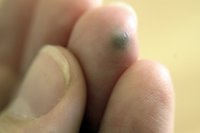
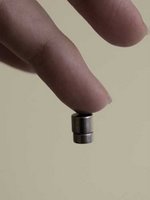
It's been described as a buzzing sensation, a tingling, an oscillation, movement, pure stimulation and, in the case of body-modification expert Shannon Larrett's encounter with a too-powerful antitheft gateway at a retail store, "Like sticking your hand in an ultrasonic cleaner."
http://www.wired.com/news/technology/0,71087-0.html?tw=rss.index
Now this may or may not surprise you. It depends on what your thoughts are and if you've read Ray Kurzweils book "The Singularity Is Near" this is nothing but a predetermined step for the human race.
But my question is this...."would you?"
Are you ready for the next step? What would your 6th sense be? (or 7th for my friends who already believe they are 'psychic').
Lasik eye surgery has become the default 'modification' of choice for people with poor sight, but if you had the option of increasing eyesight bandwidth so you could see at night, or see infra red heat....would you?
If correction of a deficieny is acceptable (hearing aids, internal pacemakers etc) then what is wrong with pushing our physical limitations, who didn't want to be the 6 Million Dollar Man or The Bionic Woman when they were kids.
And if you are vehemently opposed to cyborg modifications why is the step to part mechanical such a horror when your feelings on plastic surgery are laissez-faire?
Cheers,
Dean
What if, you could feel the hard drive spin up under the load? Or you could tell if an electrical cord was live before you touched it? For the few people who have rare earth magnets implanted in their fingers, these are among the reported effects -- a finger that feels electromagnetic fields along with the normal sense of touch.
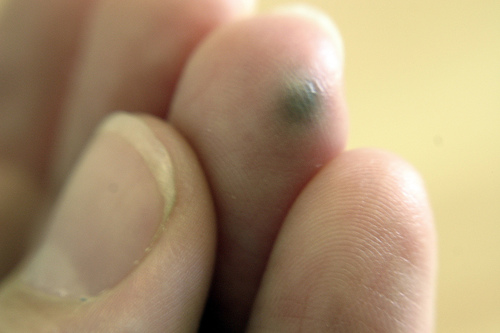
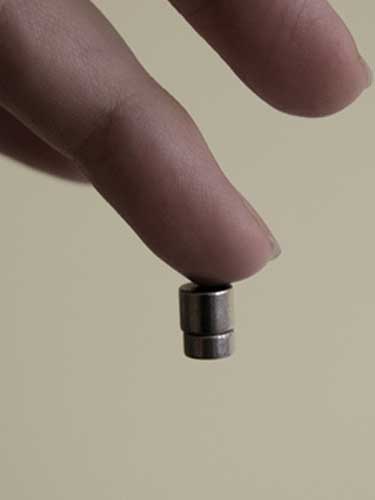
It's been described as a buzzing sensation, a tingling, an oscillation, movement, pure stimulation and, in the case of body-modification expert Shannon Larrett's encounter with a too-powerful antitheft gateway at a retail store, "Like sticking your hand in an ultrasonic cleaner."
http://www.wired.com/news/technology/0,71087-0.html?tw=rss.index
Now this may or may not surprise you. It depends on what your thoughts are and if you've read Ray Kurzweils book "The Singularity Is Near" this is nothing but a predetermined step for the human race.
But my question is this...."would you?"
Are you ready for the next step? What would your 6th sense be? (or 7th for my friends who already believe they are 'psychic').
Lasik eye surgery has become the default 'modification' of choice for people with poor sight, but if you had the option of increasing eyesight bandwidth so you could see at night, or see infra red heat....would you?
If correction of a deficieny is acceptable (hearing aids, internal pacemakers etc) then what is wrong with pushing our physical limitations, who didn't want to be the 6 Million Dollar Man or The Bionic Woman when they were kids.
And if you are vehemently opposed to cyborg modifications why is the step to part mechanical such a horror when your feelings on plastic surgery are laissez-faire?
Cheers,
Dean
Tuesday, June 13, 2006
Cool Tshirts
There is definitely one thing that they do very well here in the USA, funny cool tshirts.
Ok so this is a geek shirt that only 1 percent of the people you meet will understand, but you'll see the ones who do easily as they burst out laughing.
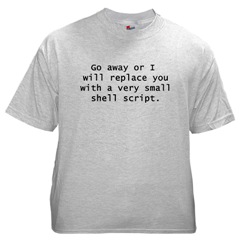
Life's short - laugh hard.
Cheers,
Dean
Ok so this is a geek shirt that only 1 percent of the people you meet will understand, but you'll see the ones who do easily as they burst out laughing.
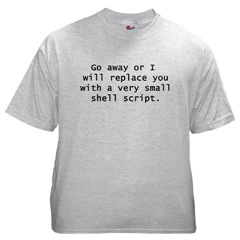
Life's short - laugh hard.
Cheers,
Dean
Wednesday, June 07, 2006
Shhh it's a secret
You know it doesn't matter how many times I try to justify how hard it is to find an apartment in New York I still find it ridiculous to justify a brokers fee of 15%
Basically everytime you move you are pretty much up for this fee, and do you want to hear the worst bit....they dont do much for the money most of the time.
So whats the secret.... http://www.streeteasy.com/
This is the most amazing real estate website I have ever seen. Technically half of the things you see on this page wasn't even possible 12 months ago.
For the tech heads in the room it is written in Ruby On Rails, for everyone else, it's this cool new coding language.
It basically takes a whole heap of information from other agents web sites and then imports it into a database before displaying it clearly and co-herently, while adding a whole heap of cool features like A9 street level vision http://www.streeteasy.com/nyc/myplace (which I wrote about in my blog 6 months ago and love :) - ah it's great to be cutting edge).
It's the beginning of the end as far as brokers go, once you have centralised data available to everyone.... :)
Cheers,
Dean
Basically everytime you move you are pretty much up for this fee, and do you want to hear the worst bit....they dont do much for the money most of the time.
So whats the secret.... http://www.streeteasy.com/
This is the most amazing real estate website I have ever seen. Technically half of the things you see on this page wasn't even possible 12 months ago.
For the tech heads in the room it is written in Ruby On Rails, for everyone else, it's this cool new coding language.
It basically takes a whole heap of information from other agents web sites and then imports it into a database before displaying it clearly and co-herently, while adding a whole heap of cool features like A9 street level vision http://www.streeteasy.com/nyc/myplace (which I wrote about in my blog 6 months ago and love :) - ah it's great to be cutting edge).
It's the beginning of the end as far as brokers go, once you have centralised data available to everyone.... :)
Cheers,
Dean
Subscribe to:
Posts (Atom)